
I’ve been thinking about the difference between having experience and being able to teach it. After several years on the sidelines in the fiber arts space, I’m finding my way back and shifting my focus. While I still may design on occasion, I still edit, and create samples. Right now I’m figuring out what it means to say: I facilitate those who knit and crochet.
There are teachers with wonderful videos and books1. There’s a yarn shop 30-45 minutes away, depending on traffic. Virtual learning has opened so many opportunities. But there’s still a need for a teacher in your local community, someone who can sit next to you and show that patience in person. That’s where I’m stepping in now, and as my role shifts, I’m noticing things I hadn’t before.
There’s a teaching in Pirkei Avot about learning from everyone2, and it’s always been my philosophy. It was true when I first taught music over 30 years ago and remains true today. If at the end of working with someone I haven’t learned something, I’m not teaching effectively. My students are teaching me constantly. I learn from their technique; maybe they’ve found a different way to accomplish the same goal. I learn from their priorities: what’s important to focus on that day? And I learn from their questions: how do they process this new thing they’re trying to master?
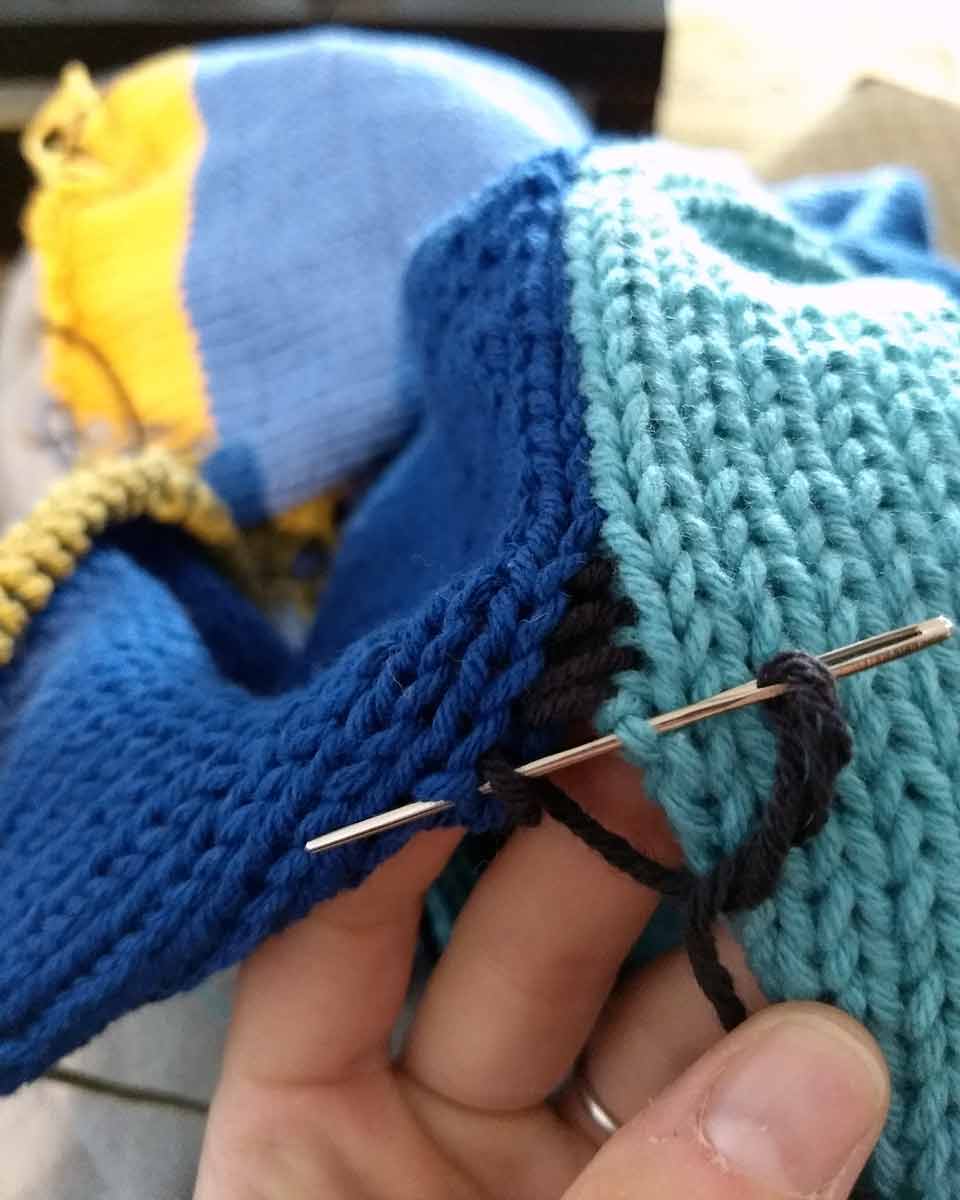
Adult learners come with decades of life experience. They bring stories of mothers and grandmothers who taught them, or friends who helped them start during rough patches. They also bring bodies that work differently than they used to. We might troubleshoot ways to make knitting less painful. We talk about why purling feels different and might trigger arthritis pain. I’ve learned to suggest breaking larger projects into smaller, more manageable pieces—not just for the physical weight of holding a big blanket, but for the mental load too. Ways to mark up a pattern and how to keep track of where you are. When memory gets fuzzy about which row you’re on or how to work a stitch you knew last week, a smaller piece feels less overwhelming. And when edges don’t end up quite square, we figure out what happened together. It’s easier when you only have a few inches to unravel instead of yards of work.
I resisted leaning into teaching for years. I don’t have fancy videos or care about matching background music to them, not to mention a manicure and I don’t get along (my hands are tools, and while I care for them, they’re rarely polished for long). I worried that I wasn’t enough. Imposter syndrome was my constant companion. However, as my role shifts, I’m rediscovering that my core philosophy is still the key to teaching: patience and flexibility. I need to be willing to meet students where they are and change as they learn, adapting to make sure they’re meeting their goals. Sometimes that means simplifying pattern instructions; it might not be what the designer wrote or how they accomplished it, but that isn’t always the end goal. What matters to my student might be a sweater that’s not technically flawless but one they enjoyed making and find pleasing. And if it isn’t, we can rip out the yarn and try again.
There’s no one right way to form a stitch, no single perfect explanation that works for everyone. Rabbi Jonathan Sacks wrote that “the influence of good teachers stays with us. They are the people who really shape our life.”3 I’m not claiming I’ve achieved that, but it’s what I’m aspiring to: to be the kind of teacher who opens possibilities rather than insisting on one right method.
Every time, I’m learning from my students. Their adaptations, their questions, their unique approaches—together they shape how I teach. Maybe that’s the real wisdom in learning from everyone: recognizing that teaching isn’t about having all the answers. It’s about creating space where everyone’s experience matters, where we figure things out together, and where there’s room for each person to find their own way forward.
- Many of them are clients of my technology consulting work at PSG Studio, where I’ve spent years helping fiber arts teachers and designers with their digital presence. ↩︎
- Ben Zoma said: Who is wise? He who learns from every man, as it is said: “From all who taught me have I gained understanding” (Psalms 119:99). see Pirkei Avot 4:1 ↩︎
- Rabbi Jonathan Sacks, From Optimism to Hope, p. 132 ↩︎
Leave a Reply