
My brain has never been reliable for the little things I want to remember. Early on I discovered if it wasn’t written down it didn’t exist. In high school, I was gifted my first Filofax and used it to track assignments, what I needed to practice, my PBs1, and more; it worked when my brain had too much else to track. In the many years since, I’ve continued to write everything down; some have said it’s too much, but it’s what works for me.
As I’ve matured and technology has evolved, I’ve adapted to integrate these changes into what I write, and how I do so. It’s taken more trials and experiments to figure out what works for me. It didn’t take me long to figure out that if I type something digitally, yes there are alarms and the repetition becomes trivial, however, I am less likely to remember that it exists at all. If I both type it and scribble it by hand, then I will remember more of the details. Perhaps this is because I have typed from an early age and jammed my manual typewriter due to speed when I was quite young. For me, typing is pure muscle memory2 and I don’t think about the process. Yes, writing by hand is as well, however there’s more ritual involved than simply wiggling my fingers over keys.
I believe this is what helps it trigger something different in my brain. There’s plenty of research out there that advocates writing by hand. I don’t need to link it here.
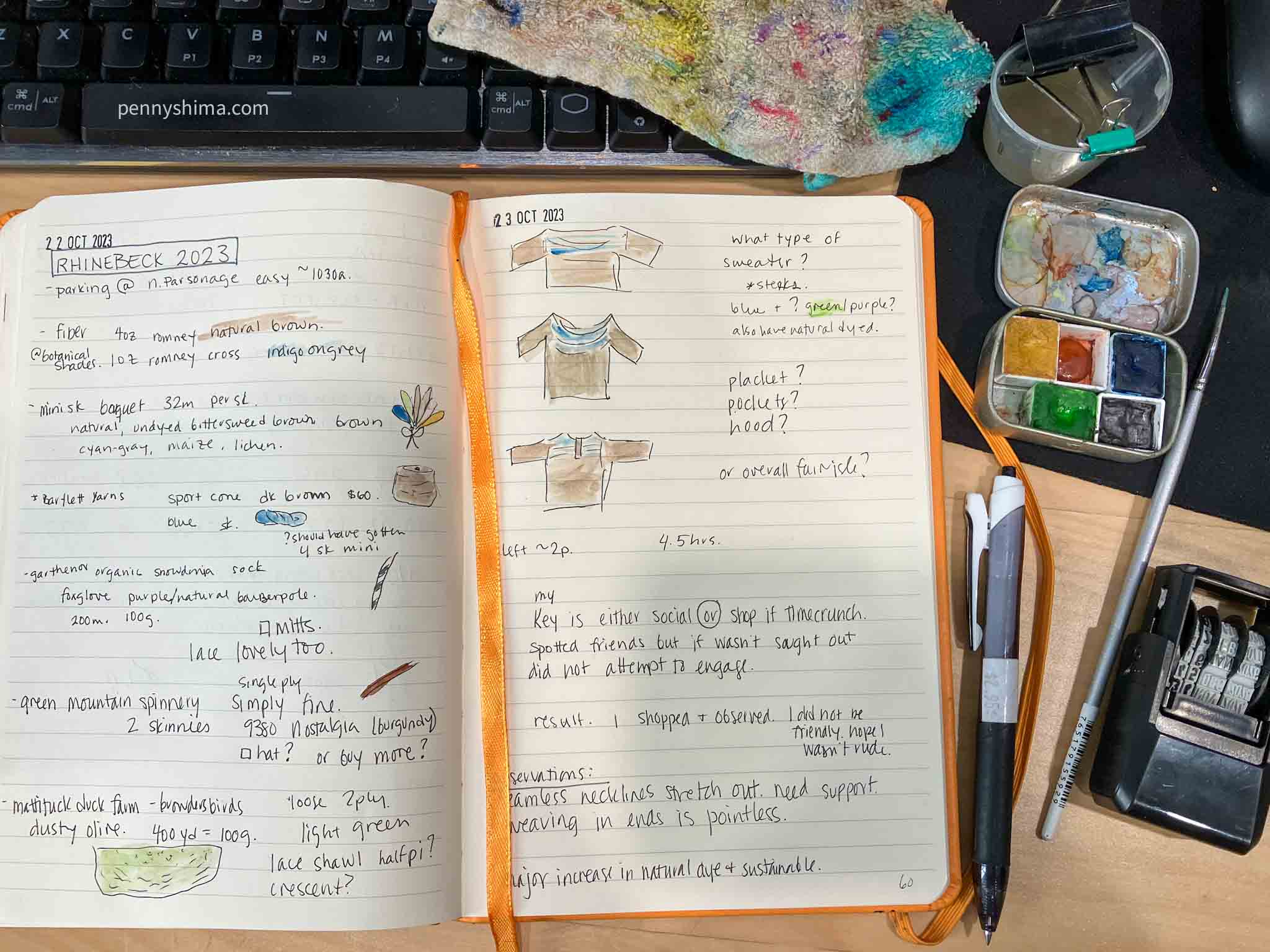
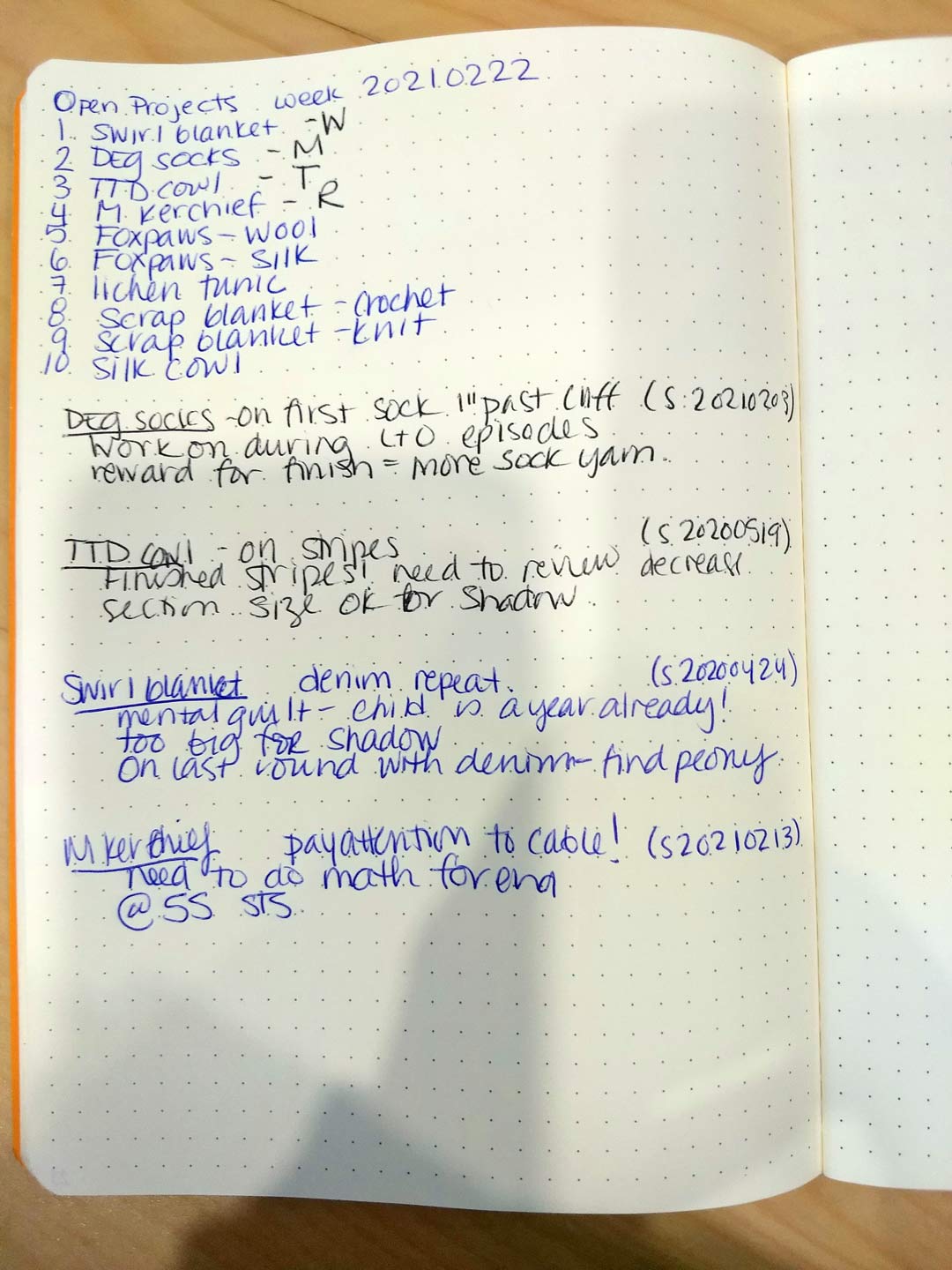
It is important to understand that there is no one perfect system. I don’t use my notebooks same way day in and day out. They aren’t anything that matches what you often see on Instagram, aka “perfect spreads”. And that’s ok, even if it I sometimes have perfection envy. I do, however, use them, day in and day out. That consistency is the key to their magic, even when my handwriting looks more like scribbles. When I have no idea what to write. I’ll cross things out, paste in various printouts or other ephemera, my goal is to record something even when it feels like it all went wrong. That is learning and while often hard to accept, it is how I progress.
A perfect notebook page isn’t my goal, writing it down is. That’s how I remember information. I don’t need to preserve it for future generations, I need to keep it for me so that when I next pick up the project, I know where I was, and maybe why I set it aside.
Often students and my tech clients want to do exactly what I do, they think I have some magical secret to success.
I don’t.
They know what they’re doing isn’t working, but because it’s difficult to think when overwhelmed hope that what works for me will magically work for them. I wish it did, it would honestly make teaching preparations much easier! The one thing I’ve discovered is that for most people, what’s missing is consistency—and a fear that it needs to be perfect. If you are craving consistency, then create worksheets and put them in a ring or disc-based binder system. If you’d rather a bound notebook, mailing labels can help organize them. If words feel too much, try starting with a simple tracker chart and just log what you worked on and when. Here’s an example:
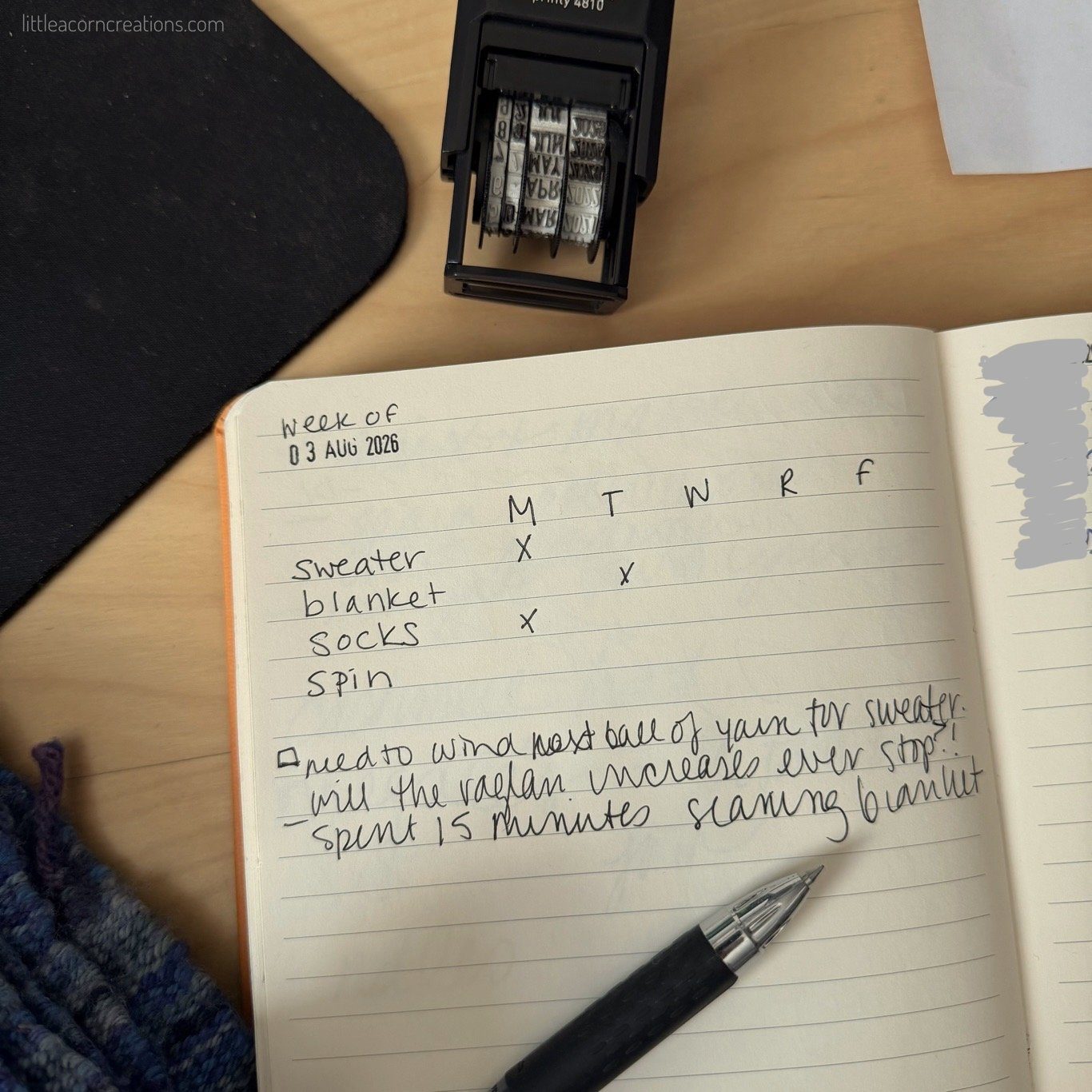
“▢ need to wind next ball of yarn for sweater.
will the raglan increases ever stop?!
spent 15 minutes seaming blanket”
The simple tracker in the image shown above lets me know the time frame, what days I may or may not have worked on a project and general details. I have a range of notes in those few lines, a task item (winding yarn), emotions (i want to be on the body, not increasing!), and a bit of a time management note. While it is only Tuesday when I took the picture, I can tell I’ve not yet spun this week. These aren’t perfect or consistent notes. But they’re notes and can help me remember.
What works for me, doesn’t necessarily work for anyone else and it’s why I don’t say “do this for a perfect swatch record”. Yes, I offer a worksheet, but it is a starting point, and I hope you’ll find what works for you, what you write, how you write it, and where. Please don’t throw away everything that you’ve done and start from scratch solely following with someone else’s method; it is unlikely to solve your needs. I believe strongly if you pay attention to what’s not working for you, fix that one thing first. The details shift as you learn what works and what doesn’t. That could be that you aren’t writing regularly, so set a time and become consistent with taking notes. It could be that you aren’t able to find your notes, so put everything in one notebook. Or maybe you can’t find what you need when you need it: add page numbers and create an index3.
Even when I use notebooks and pens that I love, I know that the system itself isn’t perfect, I’m human. When I notice friction, I try to pause and assess what needs to shift. It’s not easy to take that time, because I want to work. I want my projects to move forward. So, I try to work with what I have, pay attention to what’s not working, and make the small adjustments as I need to. The system doesn’t need to be perfect. It needs to be useful. If I have any “musts”, it needs to be a consistent practice and one that is available for reference when needed.
I highly recommend writing things down. I don’t think it’s a sign of poor memory. I think it’s a sign of a memory that knows it’s not always going to remember everything. It doesn’t matter what you use, start with what you have and where you are. If you want to use a nice notebook, that’s great! Maybe you’re reading this when it’s the time of year to grab an inexpensive composition book from a back-to-school sale. The exact notebook isn’t the important part, what matters is to capture what you see, know, learn so it doesn’t vanish.
A few other posts I’ve written about notebooks and writing things down:
- Notebook Love
- a bit about my notebooks
- keep going with imperfections.
- temporary is important too
- Organizing Communication … with Yourself


- Practice = bassoon, or cross country/track practice sessions. (or more often, both). PB = personal best, I was not a fast runner, but I strove to improve. ↩︎
- I often switch between keymaps, QWERTY and Dvorak. ↩︎
- Many notebooks today come with the pages numbered, making an index much easier to create. ↩︎
Leave a Reply