
After putting time and care into the making of every stitch, of course you want to care for your creations. Here are three of my favourite tips for washing woolen items, both in general and specifically for washing at season’s end.
Tip one – Don’t wash more than necessary
For years I washed my handknit wool socks each week because that’s how I washed the cotton/acrylic socks I wore. I knew that Wool is naturally antibacterial and resistant to odors, but that didn’t change my habit.
What did? Several years ago, when a social media campaign first started about wearing a wool dress for 100 days, that finally caused me to stop and reflect about how often I actually needed to wash my wool socks. It’s definitely not weekly!
As a bonus, time I’d spent doing the laundry is now free so there’s more time to knit and crochet!
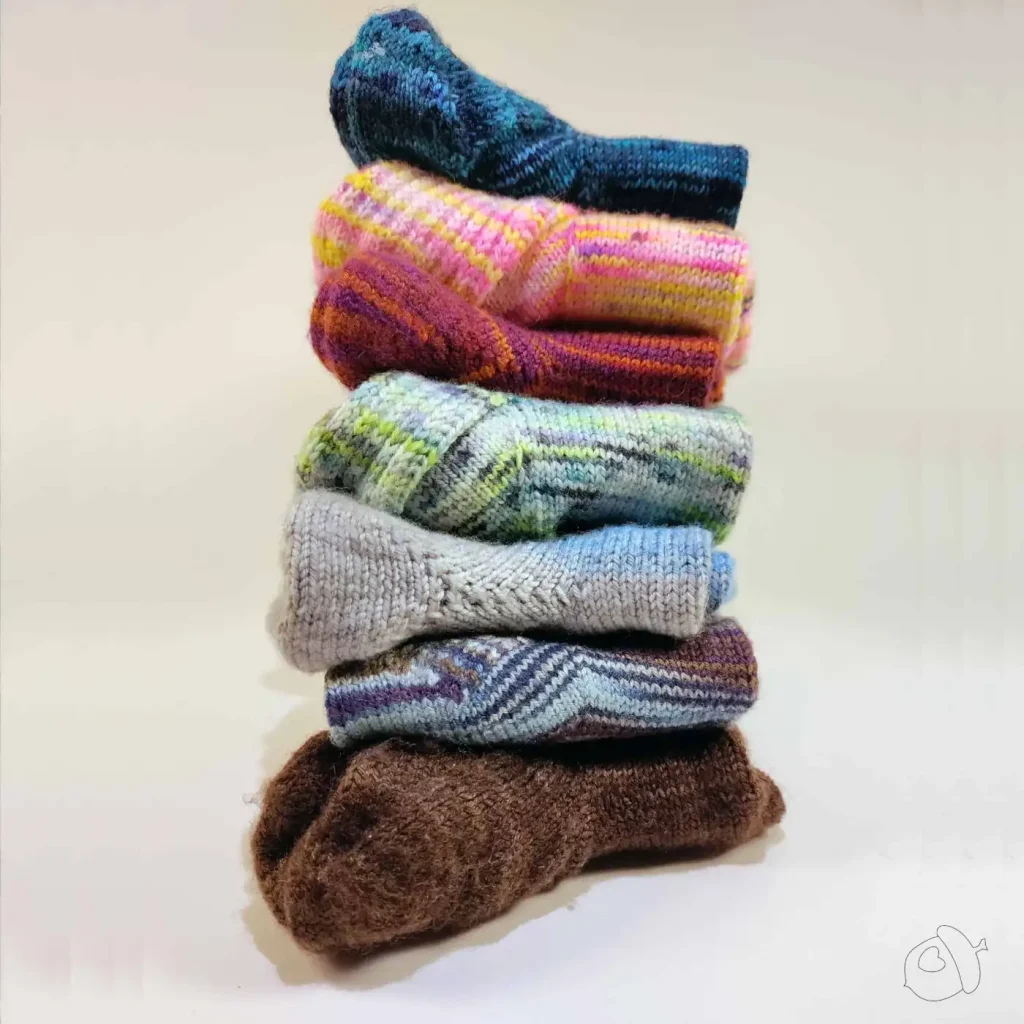
After wearing my woolens, I’ll let them air out for a day or two. How? I either lay them on an out-of-the way dresser, some (store bought cashmere) will get hung on a hook, and my socks go into a small open basket. After a day or two I give a sniff test. Most everything passes for a few more wears before they even hint of my high school gym locker and I give them a bath.
The choices I made for the item influence the wash frequency. This is true of the yarn: the amount of nylon and number of plies for example. It is also true of my design choices: gauge and stitch choice. These factors combine to influence how often the item needs washing.
However, wash if you don’t expect to wear it for a while! I give all the wool sweaters a wash in late April, it takes me about two weeks to get through everything. For this wash I add a drop of lavender essential oil to the water. I also store them with both lavender sachets and some cedar. This is the only time I’ll use anything scented.
I wear socks year-round so they don’t get any special treatment!
Tip two – cool water and no rinse wool wash
Harsh detergents can strip all the good things from wool. Choose a detergent designed for wool and delicates or dedicated wool wash. These formulas are usually no-rinse, which means they leave behind conditioning agents that help maintain the softness and shape of your knitwear. Use cool water and a clean container, ideally one that’s large enough that you can give the item a gentle swish. As you can see, I don’t always do that. I also need a kiddie pool so I can wash some of the blankets this summer.
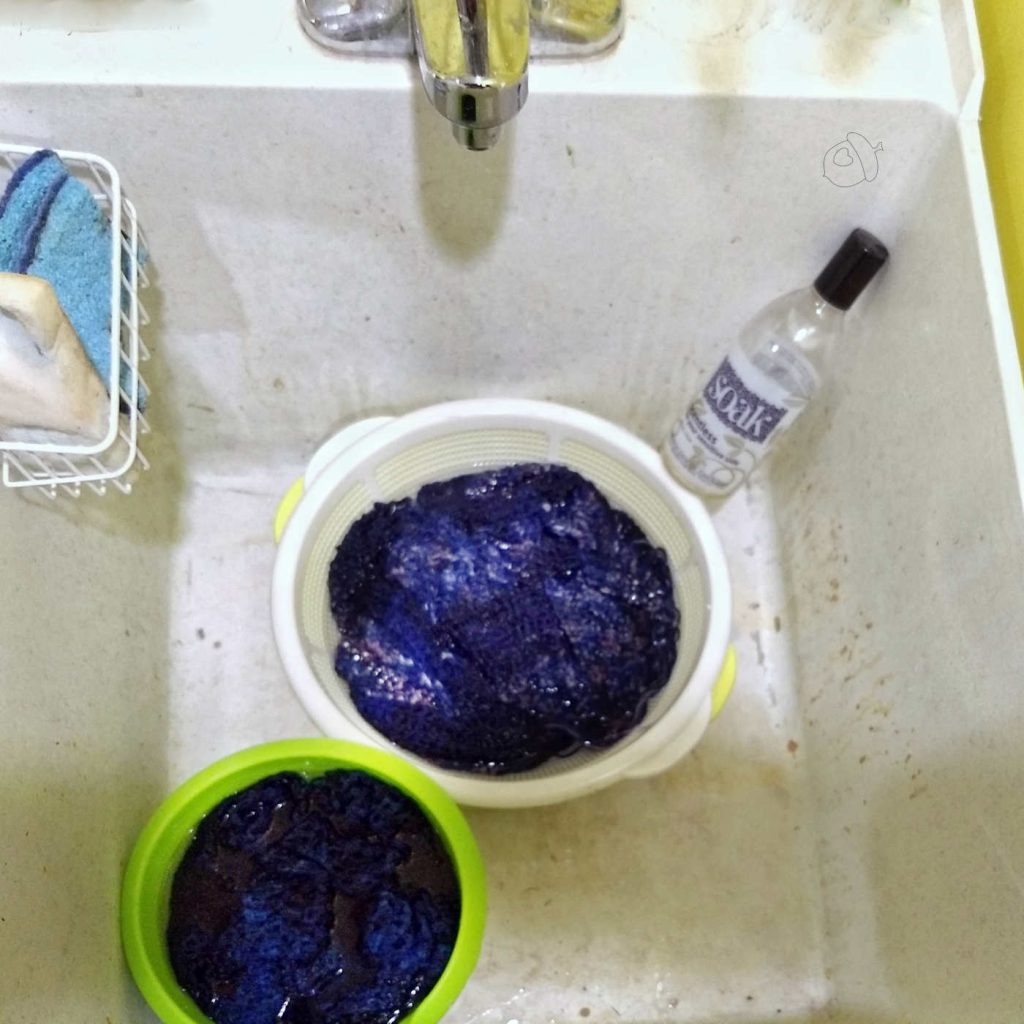
I’m looking to add a solid wool wash bar to my inventory. I’d like both to offer in the shop and I personally need to use for finishing. Do you have one you like? Please let me know.
Tip three – drain, roll, stomp, let dry (flat)
After washing, drain the item of excess water. Try to do this in a manner so the fabric is supported to minimize stretch. I have a large strainer that’s just for handwashing. Then I gently squeeze out as much water as I can without wringing. Then I lay the piece flat on an old and clean towel, roll it up, and press this to further remove excess moisture. I often step on it!
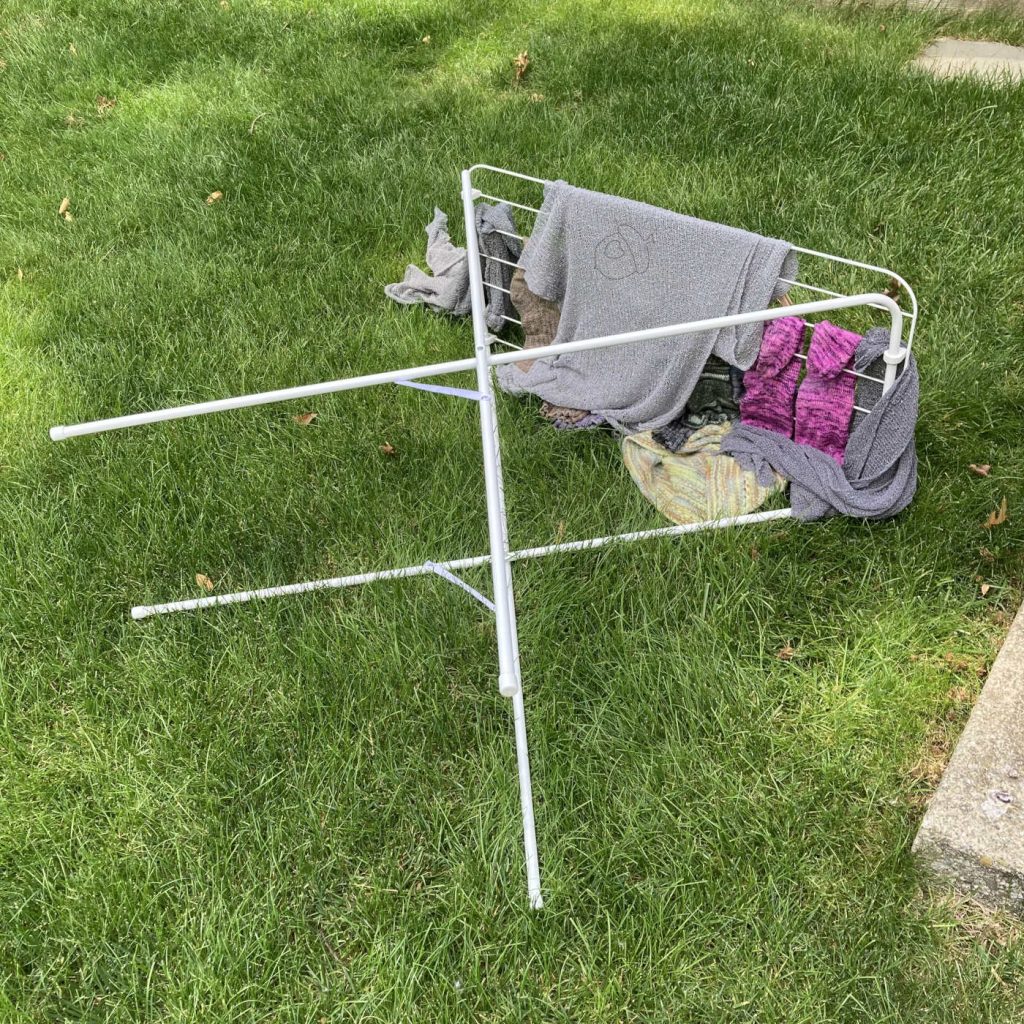
After all this, I lay it flat – either on a drying rack or a dry towel in a shaded, well-ventilated area.
I will be honest, depending on the item, I do often hang them. In general, flat and gently work the piece to the desired shape. And if the weather cooperates, I will dry outside in the sun, but I try to avoid the temptation of direct noon sunlight. But that doesn’t always go according to plan. If you have pets or dry items outdoors keep an eye on them!
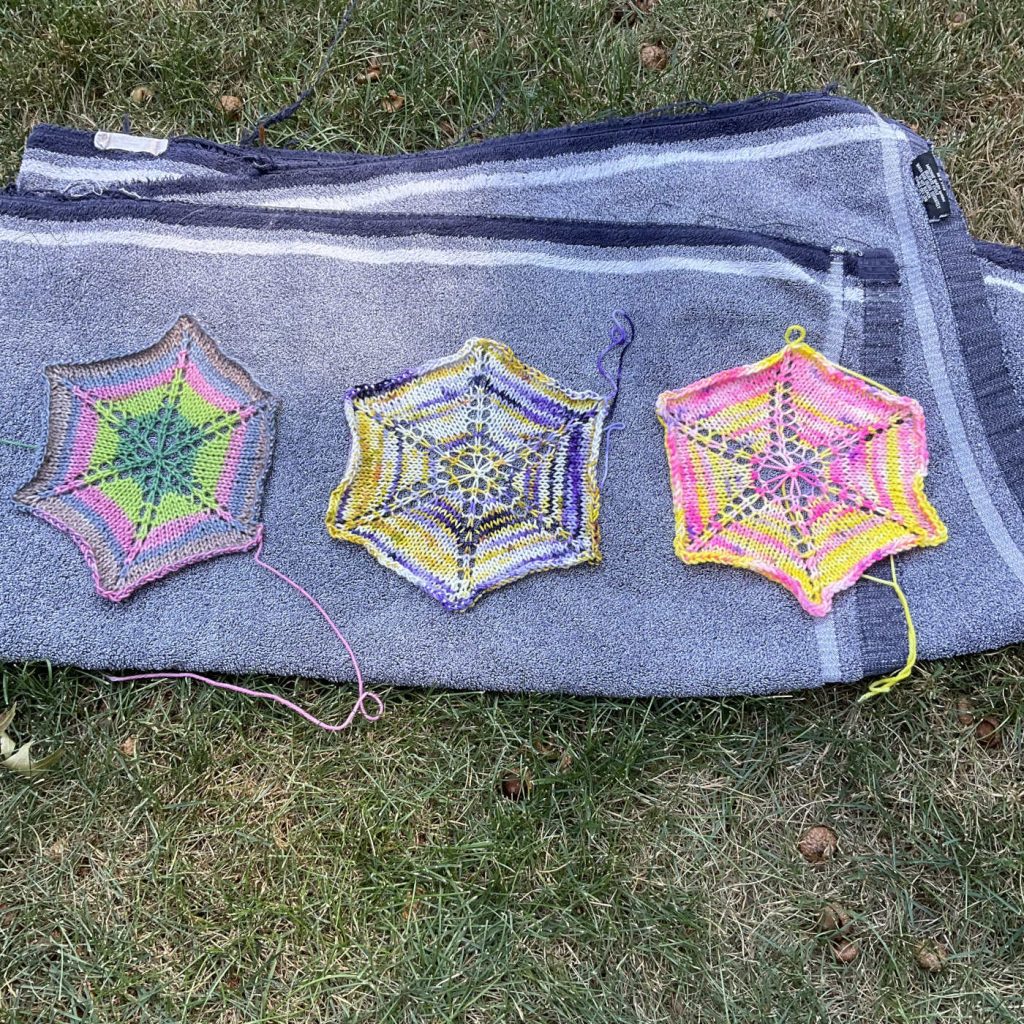
Fancy lacework that needs to be blocked is a different matter entirely. Need help? Let me know.
Curious to read more?
- Soak Wash
- Eucalan
- Washing Merino Wool Socks (from Woolmark)
- The Care and Feeding of Handknit socks (from Modern Daily Knitting)
- How to Wash Merino Wool Socks (from Darn Tough Vermont)
This is a 2025 update of a post first written in 2021.
Leave a Reply