
Sticky notes offer a quiet magic. Not simply for their adhesive charm, but because they’re humble, low-tech tools that keep my ideas organized, track progress, and pin “must remember” thoughts in plain view. My favorite 3×3 square notes live in all my bags, peek from notebooks, and nestle in my nightstand. With the rise of Japanese stationary, there are now many more sizes, formats, and colours available. But the 3×3 is my standard, and I buy them in bulk.
Let’s be clear: I don’t stress over color coding every detail. A note is a note, regardless of its hue or size, and obsessing over perfect coordination turns quickly into busywork. I try to reserve a bright pink pad solely for those urgent reminders that I can’t overlook. For example, the door I pass on my way to the garage displays these neon cues before I leave the house and ensuring I don’t forget the essentials.
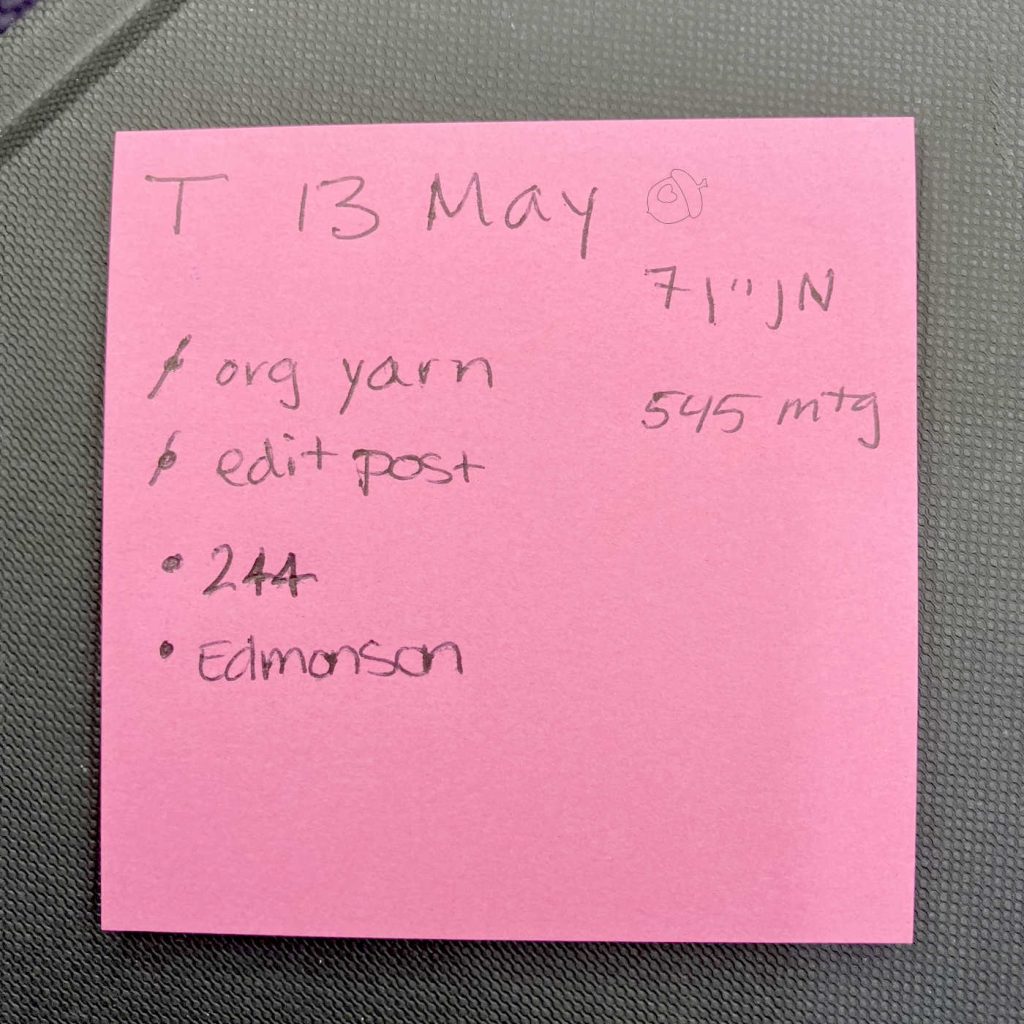
My day begins with a simple ritual: I write my top tasks and appointments on a single 3×3 square. That offers a gentle nudge; if everything doesn’t fit, it’s a sign that I’m trying to do too much.

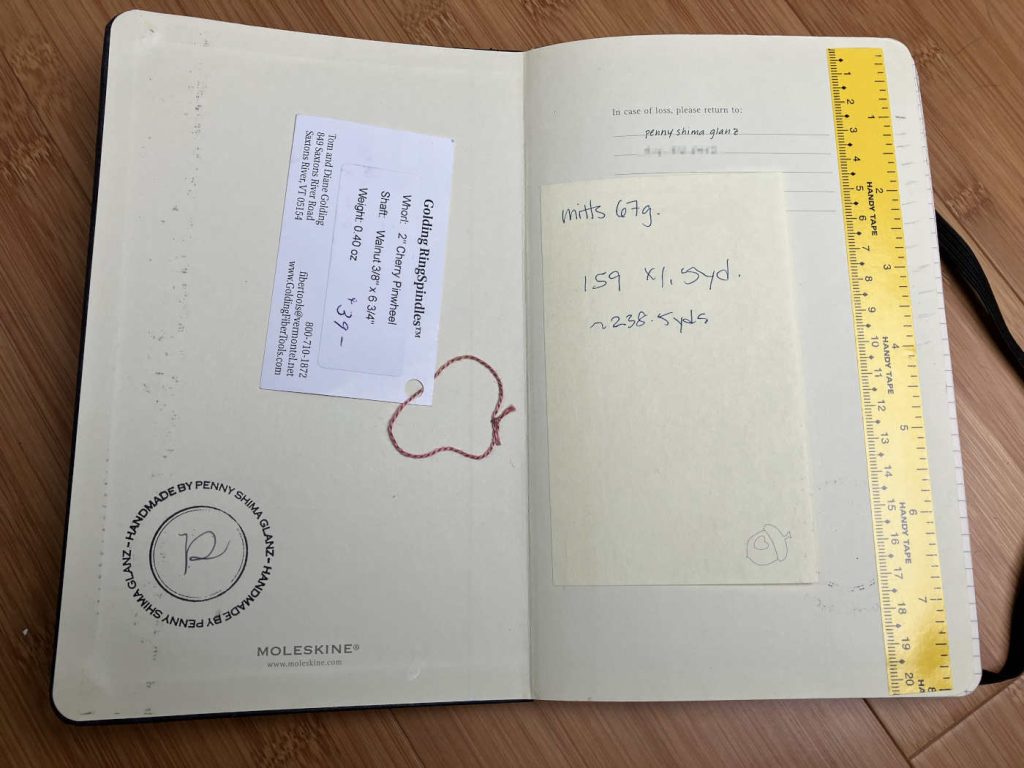
Beyond this, sticky notes become ephemeral guides throughout my day. They mark passages in books, sketch out stitch pattern ideas, and help me keep track of pattern repeats. This last is especially useful if I’ve had to rip and rework a section more than once. Below are three snapshots. One shows a stitch pattern that caught my eye a long time ago, another tracking rows on a project. This morning while preparing the photos for this post, I found a note stuck into the front cover of a 2012 notebook: I’d once calculated whether I had enough handspun yarn for a project—the details have long faded (though I believe the answer was “no”).

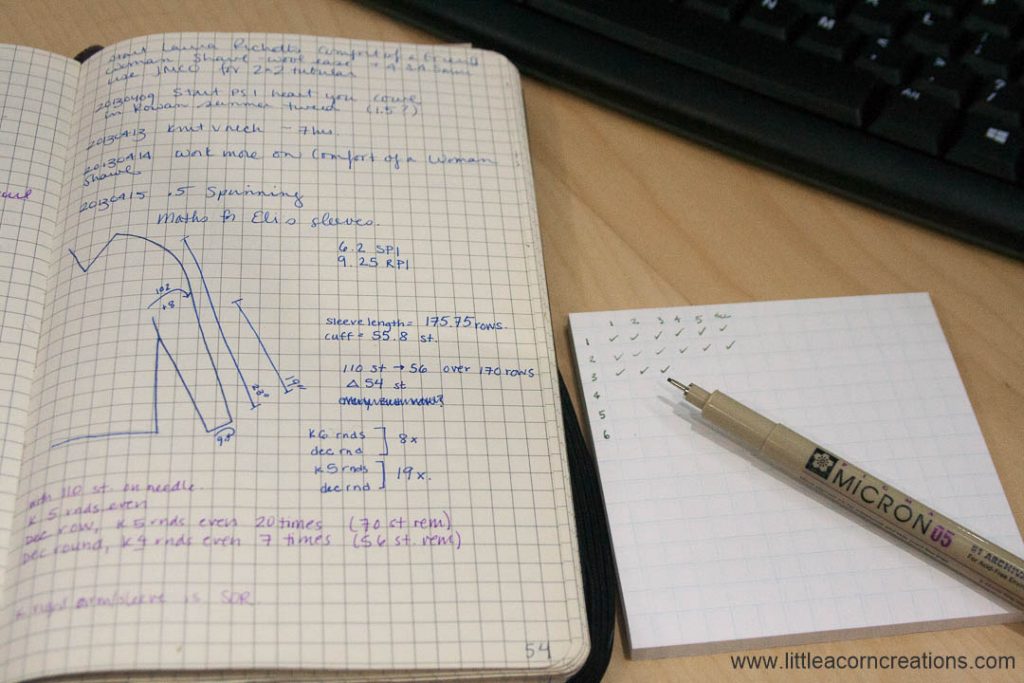
I also have a soft spot for graph paper post-its. Their neat grids are a secret weapon for tracking pattern repeats and sketching ideas. Unfortunately, they aren’t as common on store shelves, when I do find them, they feel like hidden treasures.
These modest sticky notes remind us that even the simplest tools carry creative potential. They organize our thoughts, chart pathways to new ideas, and prove that the smallest details can make all the difference.
Leave a Reply