
On Sunday, after the afternoon service for Tisha b’Av, many members of my shul gathered to create a community project from clay. Still carrying the weight of a day made all the more fraught since October 7th, we came together to create. A few hours later, our hands marked with clay, we had shaped 180 unique ceramic kalaniyot, each destined to become part of a memorial garden for victims of October 7th in front of our building.
There is something profound about moving from a day of fasting and reflection on destruction to an afternoon of making something beautiful. Tisha b’Av is a day of mourning in the Jewish calendar, commemorating the destruction of the ancient temples and other tragedies throughout Jewish history. This project together with friends known and new, guided by local artist Yael Frenkel-Jaffe, felt more meaningful than sitting at home alone with the weight of the fast, working on one of my many projects heading to Israel. Clay is not a medium I often work with, and it is one of the few mediums that become stronger upon firing. It felt good to be creating symbols of resilience and renewal.
Kalaniyot (כלניות) are remarkable flowers. These red anemones bloom in the harshest conditions, particularly in the Darom Adom area. As we worked the clay, shaping unique designs on each petal, I know I was not alone in being mindful of their persistence amid harshness, and the hope that planting flowers, even ceramic ones, brings. The flower we were creating represents the kind of beauty that emerges precisely because of struggle, not in spite of it.
Judaism is often a religion of both-and, and this felt like exactly that: we were still mourning as we were asked to create beauty. It was surreal. It was meaningful to remember the many who were lost, the hopes, the dreams. It was difficult to work on while thinking constantly of the hunger and destruction in Gaza. Gazans need food, safety, and security. It was nearly impossible to work on while being horrified and frustrated that the hostages still are not home. They need to come home now. This is what both-and is: holding space for multiple truths, multiple needs, multiple forms of experience that all demand our attention.
Similar to my work with yarn, the physical act of working with clay offered its own form of healing. There is something deeply satisfying about pressing and molding with your hands, taking something formless and giving it shape and meaning. Each person worked at their own pace, some making careful, precise flowers while others created more abstract interpretations.
This experience has deepened my understanding of what I’m calling intentional yarn therapy. Whether we’re working with clay that strengthens through fire or yarn that builds stitch by stitch, both practices offer ways to process difficult emotions while creating something meaningful. Just as our individual kalaniyot will become part of one memorial garden, I think of how small squares or stripes can join to become blankets, how each small practice of making has value even before it becomes part of something larger.
What struck me most was how this project embodied both individual expression and collective purpose. Each of us made our own kalaniyot, bringing our personal touch to the work. Yet all 180 flowers will eventually come together in one unified garden installation. Our individual acts of creation will become something larger than any of us could achieve alone.
The process itself mirrors the way healing often works. Right now, the clay flowers are fragile, drying slowly before they can be fired. Then they will wait again before we gather to glaze them. Finally, we will install them in the garden. There is patience required, trust in the process, faith that what feels vulnerable now will become permanent and beautiful.
This rhythm of making, waiting, and returning speaks to something essential about how we move through difficult times. Healing isn’t complete at once. We will grieve our entire lives, and beyond. That is what Tisha b’Av teaches us: I was not alive for many of the horrors that happened to the Jewish people, but I mourn them all the same. I also find hope. It mirrors my experience and why I’ve been writing more and building this program about intentional yarn work: how the repetitive motions of knitting or crochet can hold us through grief, how projects evolve slowly. It all requires patience and trust. We cannot rush firing or skip glazing, just as we cannot force a complicated colorwork pattern when we need the simplicity of garter stitch. Each stage has its own timeline, its own purpose. Each stitch, each swatch, each step has value.
There is something deeply hopeful about planting beauty in soil, about creating flowers that will weather seasons long after we have forgotten the weight of clay in our hands. This is the work of intentional making, whether with clay or yarn: taking the raw materials of our experience, both joyful and sorrowful, and shaping them into something that serves not just ourselves but our community and those who will come after us. I think of the blankets the sisterhood is knitting for local children’s hospitals and of the many items I’ve made as well as all that I’ve collected and sent to Israel. Like our ceramic kalaniyot, these handmade objects carry intention and love into the world long after the making is complete.
In the space between destruction and renewal, we took lumps of clay and transformed it into flowers. Sometimes healing looks exactly this simple, and exactly this profound. And for each and every one of us gathered together that afternoon while we were all healing, it looked different for each of us. Whether our hands are shaping clay or working yarn, the invitation remains the same: to create beauty from brokenness, to find community in shared making, and to trust that our small acts of intention can bloom into something larger than ourselves. This is the foundation of intentional yarn therapy: using our hands and hearts together to navigate life’s most challenging moments through the ancient wisdom of making, one stitch, one breath, one small act of creation at a time.
I neglected to take photos of the gathering, my hands were covered in clay.
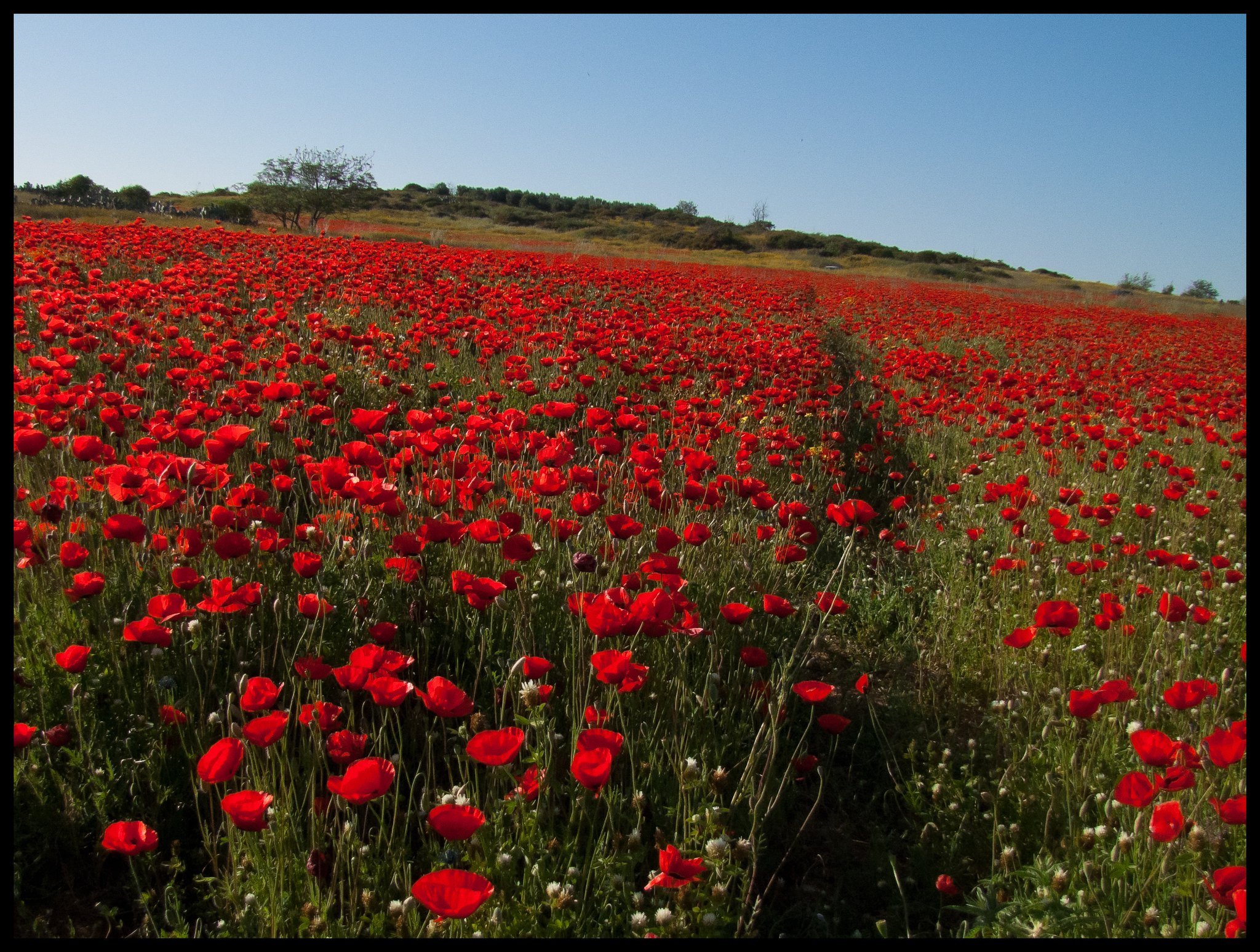
Photo: “Kalaniot in Ness Ziona-002” by Flavio~ (Flickr) licensed under a Creative Commons Attribution 2.0 license
Leave a Reply