
Late spring in southern Westchester is its own micro-season (often several in the same day). Peonies are ready to pop. I blink and the lawn is overgrown and in need of a trim. It’s everything all at once and still waiting for the beauty to fully surround me. Things are coming up everywhere, in my garden, in my studio, in those who walk through the door week after week. Some of it was intentionally planted. Some are surprise volunteer1 joys.
The Thursday afternoon group (the Circle) has been running for a few months now, and I’m beginning to see what’s taking root. Not just what is being made, but the thought processes around making and creating. That’s how work is, it is very much like gardening and a seed taking root deep in the soil: the growth isn’t always visible until suddenly it is.
I spent part of last week at h+h americas, my first trade show attendance since 2019. Walking the show floor felt both/and — familiar and strange at the same time, the way returning to a place always does after a long absence. I’m grateful for everyone who offered a hug, said simply, “it’s good to see you again”.
There’s something about showing up. On the good days. And the not so good. On the days when you slept well. And the ones you didn’t. And on the ones when you have to accept that you can’t be there in person, and you do what you can remotely.
Showing up, as Rabbi Brous has written extensively about2, is how we see each other. How we meet each other where we are. And how we find ways to grow and heal. Individually and together.
Showing up is also how things get made.
I came home with a head full of ideas and a notebook full of scribbled sketches. Some are years in the making, some are brand new.
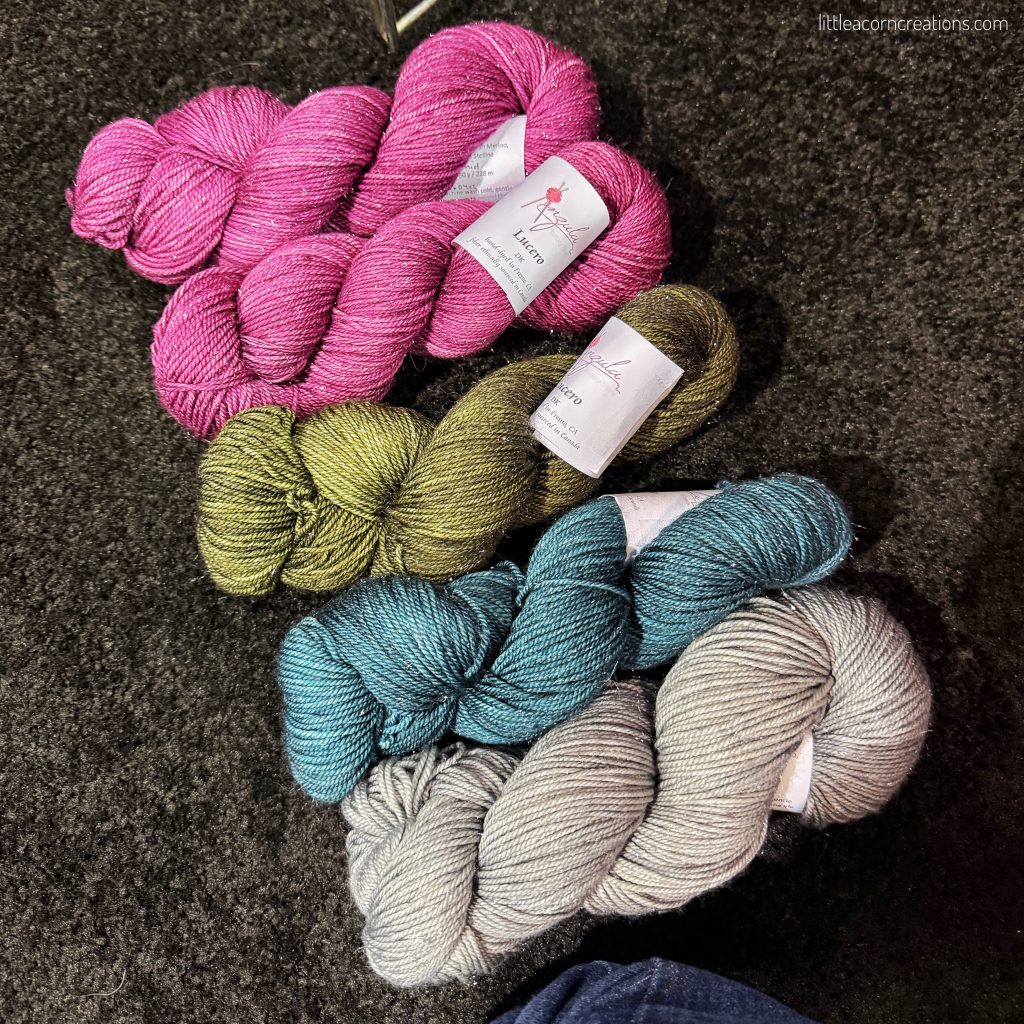
I brought back a sweater quantity of yarn.
I’m not known as a sweater knitter. Grading is not my strong suit, I struggle enough to find clothing to fit myself and my measurements let alone figure out how to make something that should work for all the other myriad permutations that are humans, each one unique.
When I was in the Anzula booth looking around at known and new-to-me yarns, I asked what new designs were desired. A sweater. I walked away from the booth mulling this — looking at the displays, thinking through the short list of who could turn something around in time. Most designers I know are booked solid for months, some for longer. I kept coming back to the fact that I’d been sitting on this idea for years. Maybe the right person was standing closer than I thought.
The truth is, I’ve had a desire to design a sweater for several years. Something understated that works casually or in a bit more fancy of settings, it must be fun to knit, and genuinely wearable. With instructions that make sense. I want it to be a sweater that succeeds.
My work with students over the past few years has me rethinking construction and pattern layout and instruction in ways I didn’t anticipate. I wouldn’t call it skill-building exactly (though it is), and I wouldn’t call it design experimentation exactly (though it’s that too). It’s more like: watching people knit has changed what I think a pattern needs to do and how it does it. Highly skilled knitters can be befuddled and I have strong opinions on what doesn’t work. So can I make a design that works and looks good at the same time?
The yarn is Anzula Lucero3, a sparkly DK in a main color and 3 extras. The sleeves and yoke will be the same color with a shift toward some colorblocking on the torso and maybe to help lengthen the sleeve. It’ll be understated: slightly feminine yet not fussy. It’ll be top down for both the body and the sleeves, we’ll use a scale to help maximize every gram and yard we have. We’ll start with a sleeve as a swatch, I know no one wants to do it so let’s make it a functional swatch. Other techniques I intend to include are a provisional cast-on and short rows. I have a few ideas I plan to work into the design to help with seaming alignment, which means checking both row and stitch gauge.
It’s also exactly the kind of project that asks you to both slow down and pay attention. And yet, it’ll hold you and take care of you when it comes to the more fiddly parts (seaming).
If that weren’t daunting enough on its own, the booth sample needs to fit a larger chest and body than my own petite frame so it can actually be tried on by a variety of prospective customers. It’s a fitting constraint that will make the design stronger.
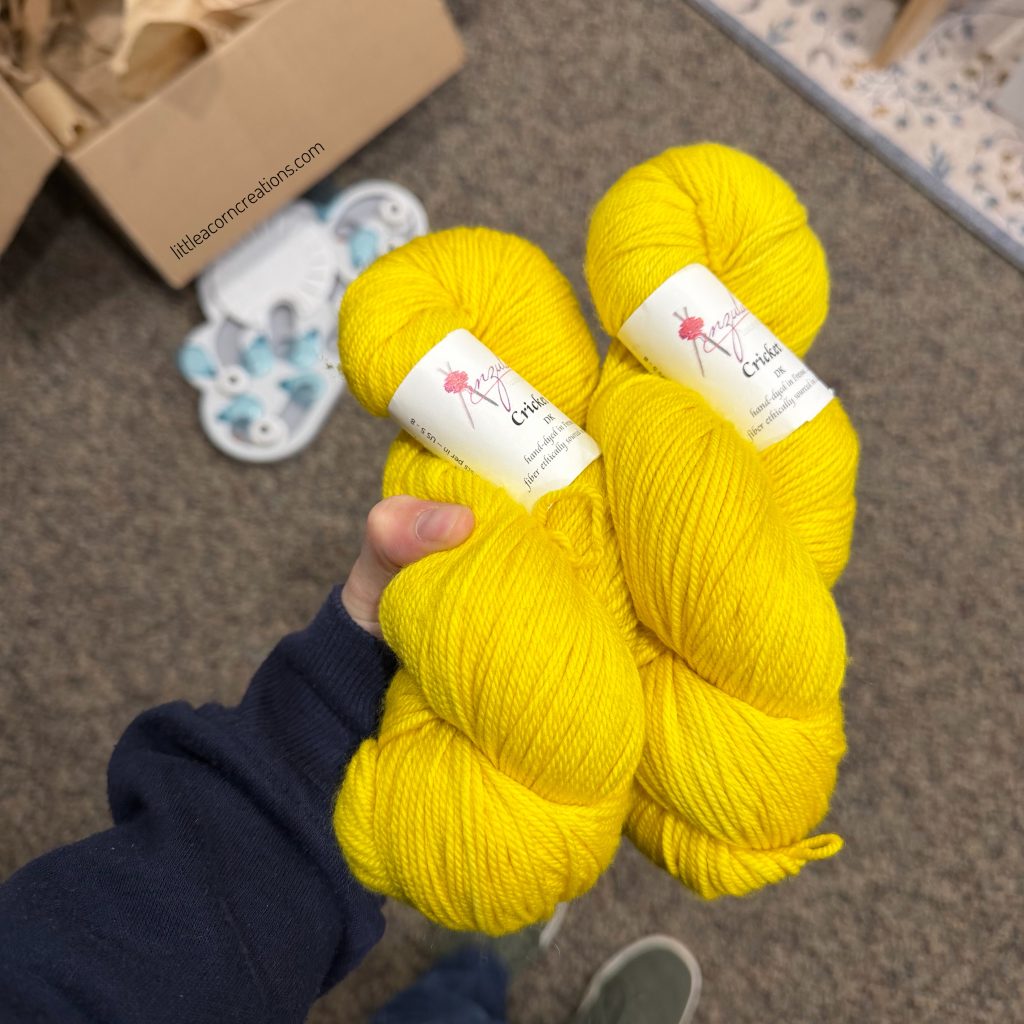
I’m also reworking a new sample for Aryton in Cricket, I’ve been planning the re-release but I didn’t expect to have an opportunity to create a new one for Anzula. I’m excited to see it not just in the very wearable (and slightly lighter DK weight) yarn, and in a bright very un-Penny color for the new booth sample4. There’s a new shawl too, it’ll be in Sonnet, but that’s a story for another day.
Some things take longer than expected, and then suddenly it all settles into place. Knitting knows this. So does spring.
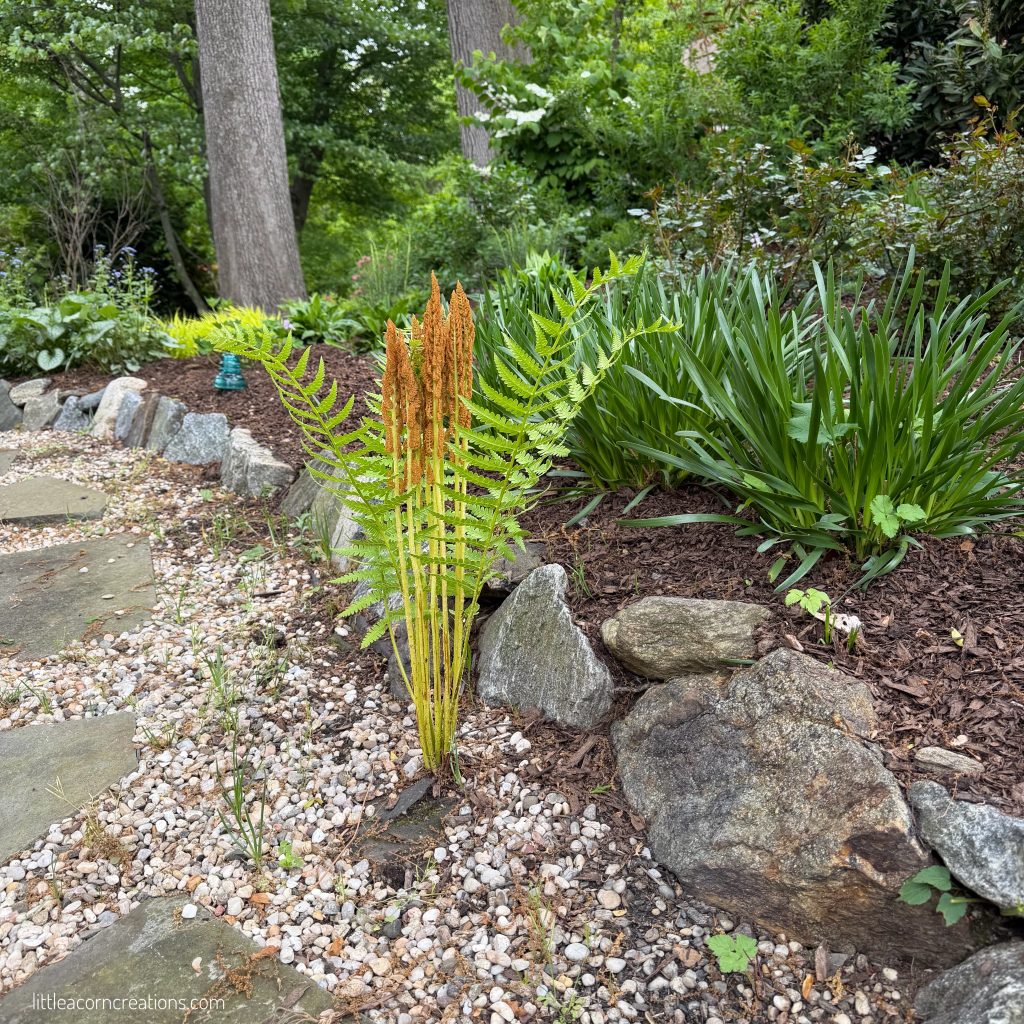
- a volunteer plant is one that pops up where i didn’t plant it. depending on compost this is most often tomatoes. I have a fern that is determined to grow through the landscape lining and in the middle of the gravel garden path. The first year it came up, I fought it. The second year, I made sure it had space to grow. This year, I’m enjoying it. ↩︎
- see Brous, Sharon. The Amen Effect: Ancient Wisdom to Mend Our Broken Hearts and World (Avery, 2024). Also worth reading: “Train Yourself to Always Show Up,” New York Times, January 19, 2024. ↩︎
- I first worked with Lucero in 2018, swatching it for Anzula.. ↩︎
- Kalliope asked me while eying the yarn wall … “do you think you can work up the sample in something bright?” I saw all the pinks and inwardly groaned and was not expecting to hear the next words, “how about a yellow”? I was surprised but looking around at the wall of designs and knowing the textures of my poncho, this is the right decision. It’s a bright happy color and I look forward to working it up. ↩︎
Leave a Reply