
My newest student knit me a beautiful swatch the other day. Even tension, consistent stitches, a lovely rectangle of garter stitch fabric.
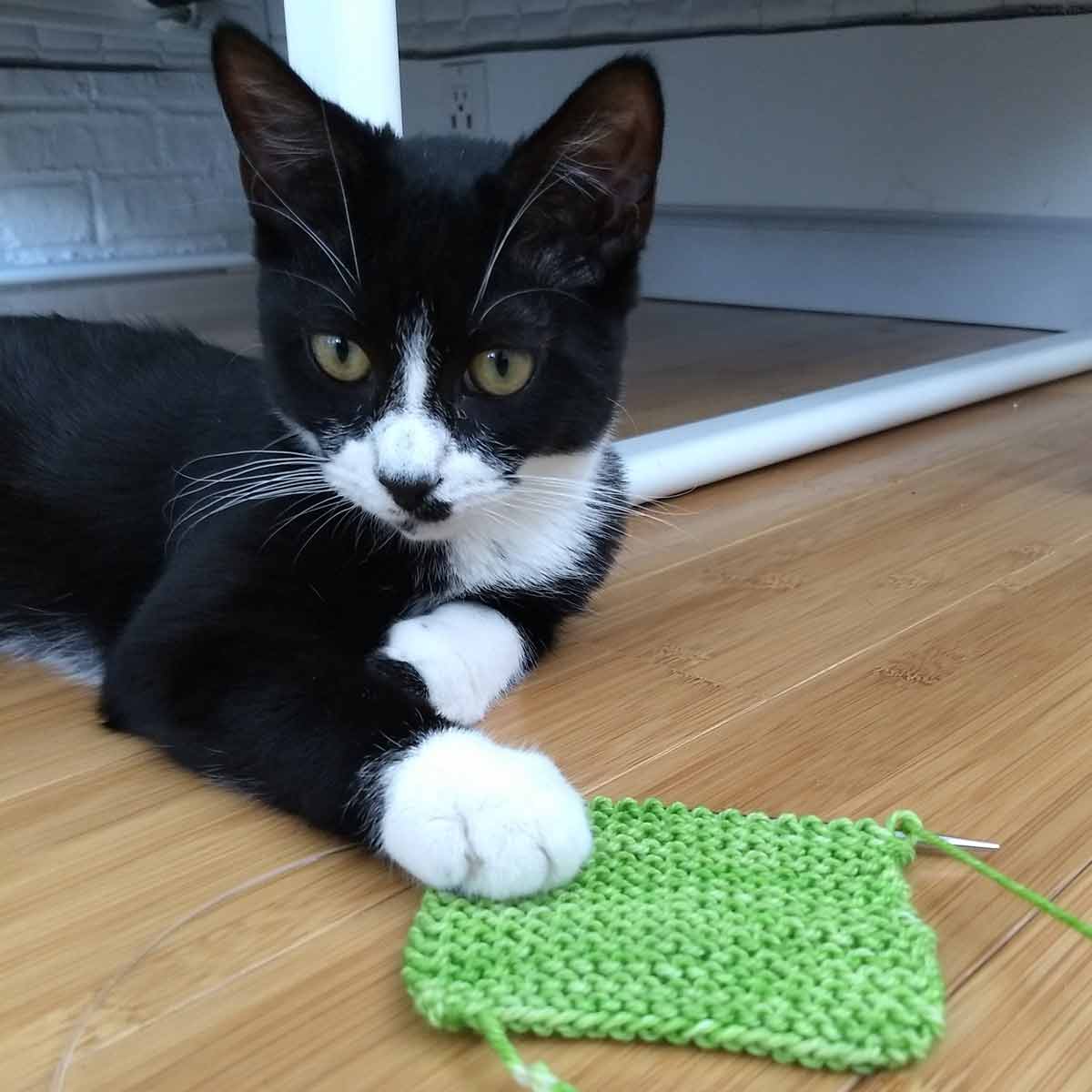
There was one just problem: I’d meant for them to knit stockinette.
I asked them to “knit for several inches.” By that I meant knit one row, purl one row, aka stockinette. They heard “knit every row.”
We both did exactly what we thought was right and ended up with completely different fabric. That’s the thing about knitting: the same words can mean different things, and the same yarn can become different fabric depending on who’s holding the needles.
Their garter stitch swatch is gorgeous and even. My student knows they knit tight (or maybe it’s purl; they aren’t sure yet), but they don’t understand why they can’t just use the needle size listed on the pattern. Why swatch at all if the designer already told you what to do? Didn’t they swatch?
A note for crocheters: While this post focuses on knitting, the same principle applies to crochet. Experimenting with different hook sizes (and maybe comparing single crochet vs. half double crochet) will teach you how you create fabric too. (you would skip swatches C and D)
The Five Swatch Experiment
So I’m designing a series of swatch lessons to help my student see what their hands do. Five smaller sized swatches, same yarn in slightly different approaches. It’s not about finding the “right” gauge yet. It’s about building understanding.
Let’s say we’re using a light worsted weight yarn. The ball band suggests 4-5 mm needles and 4.5-5 stitches per inch.
As my student knits tight and wants a light, drapey fabric, for this experiment we’ll use 5 mm as our baseline and 6.5 mm for the secondary part of the experiment.
For all swatches: cast on enough stitches to give you about 4 inches width based on the ball band gauge. (In this case, 18 stitches.) You don’t need to make a large swatch, but it needs to be large enough to see patterns and differences between the swatches.
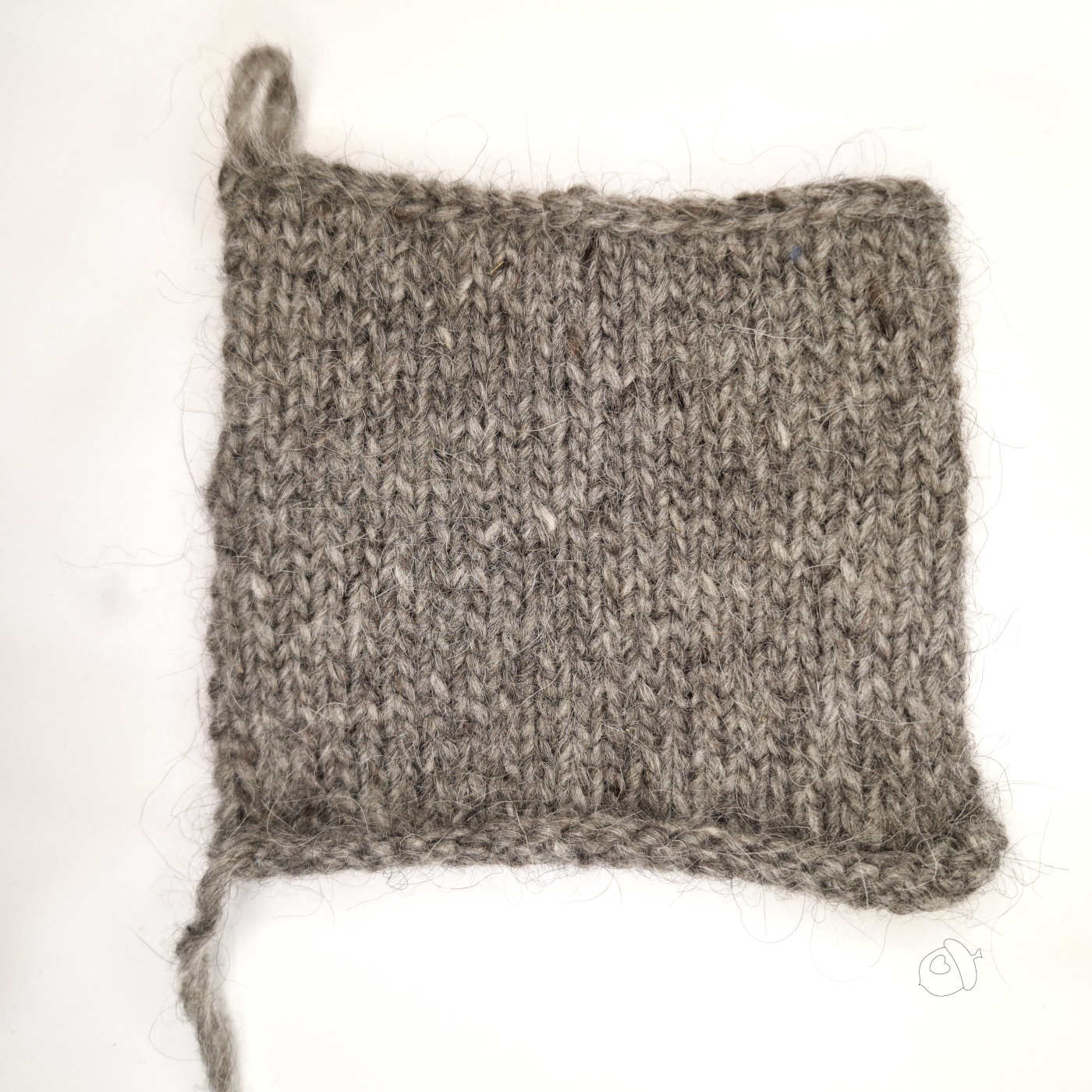
Swatch A – garter (5 mm needle):
Knit all rows.
Swatch B – stockinette (5 mm needle):
Row 1: Knit
Row 2: Purl
Swatch C – stockinette (two needles, or an interchangeable with 5 mm on one side and 6.5 mm on the other):
Row 1: Knit (with 5 mm)
Row 2: Purl (with 6.5 mm)
Swatch D – stockinette (same two needles as swatch C, but worked different rows):
Row 1: Knit (with 6.5 mm)
Row 2: Purl (with 5 mm)
Swatch E – stockinette (6.5 mm needle):
Row 1: Knit
Row 2: Purl
I have a prediction: Swatch A will be even. One of C or D will be even too; I think D based on watching my student work. Swatches B and E will show how dramatically needle size affects the fabric.
But here’s the thing: I could be completely wrong. That’s why we swatch. Not because I know the answer, but because the yarn and the knitter together will show us the answer. And it’s different for everyone.
Building Your Own Reference Library

This is exactly why I keep a swatch library. Not because I’m collecting pretty squares or following some aspirational maker aesthetic. I keep my swatches because they’re my personalized textbook. Each one is a page I wrote myself.
Every knitter is different. Every yarn behaves differently. Sometimes even colors within a yarn are different and a swatch can help.
When someone recently asked if I’d design a lookalike pattern (based on a garment from a big fashion house), my first move wasn’t to grab needles. It was to grab my stitch dictionaries and start thinking my swatch (the yarn is obvious but that comes next). My swatch library is what makes that kind of work possible. I know how to ask questions of stitches and yarn because I’ve practiced asking those questions.
Building a swatch library is sustainable practice. It’s choosing to learn about yourself before committing hours to a project. It’s the opposite of fighting your tools every single time you cast on.
This is intentional yarn work. A smaller swatch can give you your knitting or crochet answers at a moment in time.
Try This:
If you’re a tight knitter (or think you might be), try the five-swatch experiment. Use a yarn you’re curious about and see what your hands do. Download the swatch worksheet to track what you learn.
Tell me: what did your last swatch teach you?
Leave a Reply